
Fixed vs. variable mortgage in Norfolk County: what if you sell early?
You’ve found a home in Simcoe, Delhi or Port Dover. Maybe you already have a pre-approval. Now you have to pick a fixed rate or a variable rate.
Before you compare rates, ask yourself one question. Will you still own this home when your term ends?
You might outgrow a starter home, take a job in another town, or find the acreage you wanted all along.
Here’s why that matters. With a closed mortgage, you can’t pay off the whole loan early without a penalty. So if you sell before your term ends, you’ll usually pay one. How big is it? That depends a lot on whether you chose fixed or variable.
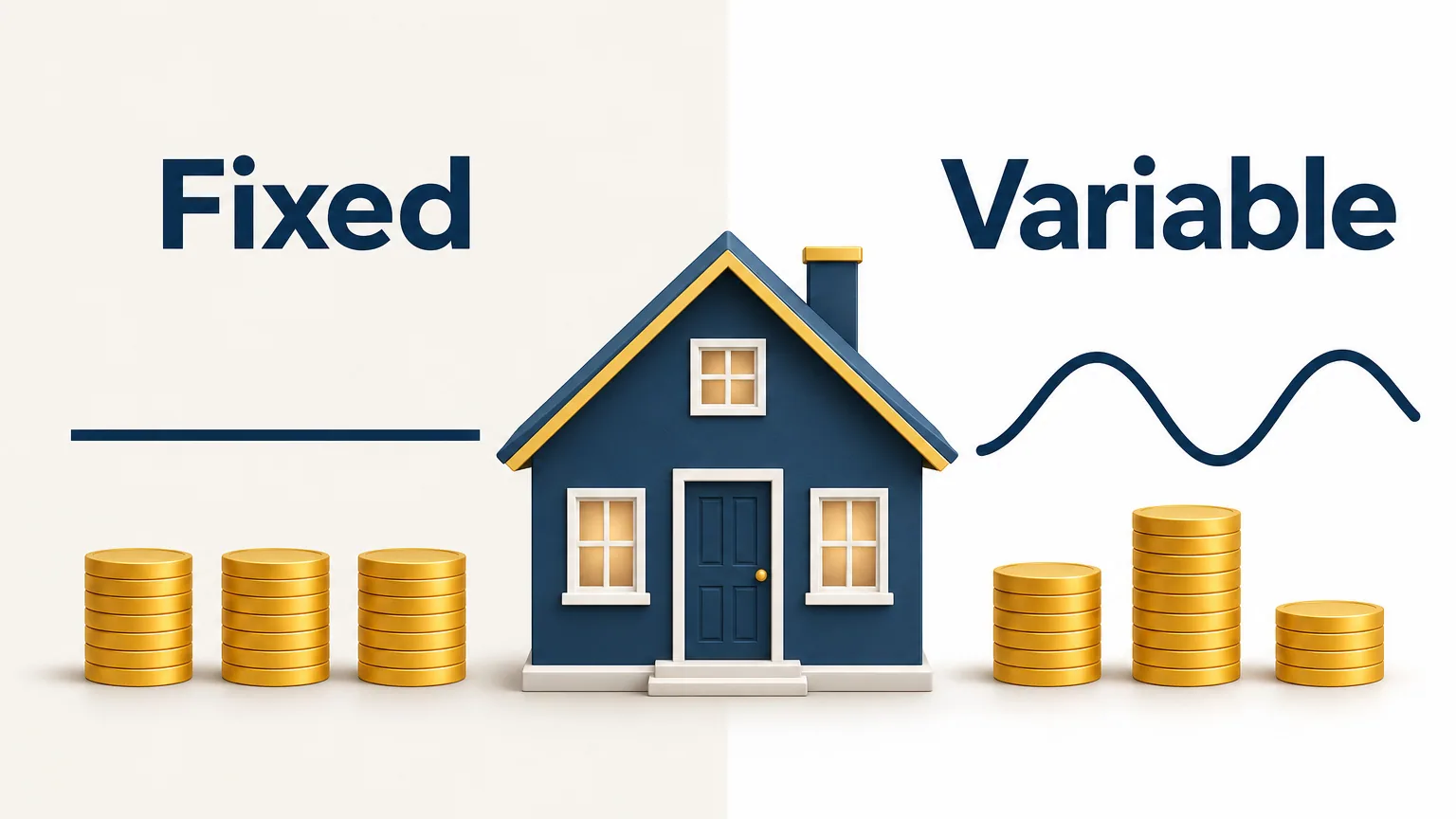
What does it cost to break your mortgage early?
A closed variable mortgage usually costs three months’ interest to break.
A closed fixed mortgage usually costs the bigger of two amounts:
- Three months’ interest
- The interest rate differential, or IRD
TD describes both charges this way for its own mortgages. Your contract sets your actual penalty.
So what is the IRD? It covers the interest your lender loses when you leave early. The Financial Consumer Agency of Canada (FCAC) explains how lenders calculate it.
Here’s how it works. Say you have three years left on your term. Your lender compares your rate with the rate it charges today for a three-year term.
Is today’s rate lower than yours? Then you pay the difference on what you still owe, for those three years. The more rates have dropped, the more you pay.
Have rates gone up since you signed? Then your penalty can be three months’ interest, the same as a variable.
One warning. Lenders don’t all do this math the same way. Some use the rates they advertise and the discount you got when you signed. With that method, you can owe an IRD even when rates haven’t dropped.
I go through your lender’s method with you before you commit.
The penalty isn’t the only cost. FCAC lists other fees you may pay: an administration fee, a discharge fee, and any cash back you received when you got the mortgage.
How much could the penalty be on a Norfolk County home?
Let’s use a Norfolk County price. The median sale price of a single detached home here was $585,000 in the third quarter of 2026. Put 20% down and you borrow $468,000.
Now say you sell two years later. For this example, assume you still owe $450,000 and have three years left on a five-year term. Both mortgages are at 4.5%.
These rates are examples, not today’s quotes. I’ve used the simple method from FCAC’s own example, which leaves out any discount.
| Variable | Fixed, if the lender’s rate hasn’t dropped | Fixed, if the lender’s rate dropped 1 point | |
|---|---|---|---|
| Three months’ interest | $5,063 | $5,063 | $5,063 |
| Interest rate differential | Doesn’t apply | $0 | $13,500 |
| Penalty you pay | $5,063 | $5,063 | $13,500 |
“The lender’s rate” is its rate for a three-year term, because you have three years left. It’s 4.5% or higher in the middle column and 3.5% in the last one.
Three months’ interest is 4.5% of $450,000 for three months. The IRD is the 1% difference on $450,000 for three years.
Your lender’s number will differ. Ask for it in writing before you list your home.
In this example, the fixed mortgage costs $8,437 more to break. That money comes out of your sale. You may be counting on it for your next down payment.
Can you take your mortgage with you when you move?

Often, yes. Porting moves your balance, rate and terms to your next home, and it can save you the penalty. FCAC explains how portable mortgages work.
But porting comes with conditions, and they vary by lender:
- Not every mortgage is portable. CIBC says about its own terms. Check before you sign, not when you sell.
- There’s a deadline. RBC gives 120 days between the two closings on its variable mortgages. Other lenders set their own.
- Your lender looks at the new home too. This matters here. Say you move from a house in town to an acreage with a well and septic system. The lender may ask for extra reports before it agrees. See what lenders look at on rural and acreage properties.
- Borrowing more can change your rate. Some lenders blend your old rate with today’s rate for the extra money. RBC offers this.
- Buying for less can still cost you. If your new home costs less than the amount of your mortgage, you may pay a penalty.
Did you put less than 20% down? Then you have mortgage default insurance. If yours is with CMHC, it may also be portable. That’s separate from whether your lender lets you port the mortgage.
What happens to a variable payment when rates change?

It depends on which kind of variable mortgage you have. FCAC describes two kinds:
- Your payment changes. It goes up or down when the rate changes.
- Your payment stays the same. When rates rise, more of your payment goes to interest and less to what you owe.
The second kind has a limit. If rates rise far enough, your whole payment goes to interest. Your contract calls that the trigger rate. Above it, your lender may raise your payment, or the amount you owe may grow.
So a variable mortgage has the more predictable penalty, but a less predictable rate.
Try a higher rate in the mortgage payment calculator. Could you still manage that payment?
Which one fits your plans?
Match the mortgage to how long you expect to stay, not only to today’s rate.
A smaller penalty alone doesn’t make one mortgage cheaper. Compare your actual quotes. Add up the interest you’d pay before a possible sale, plus the cost of ending each mortgage.
| Your plan | What matters most |
|---|---|
| Stay for the full term | You’re unlikely to pay a penalty, so compare the interest you’d pay. A fixed rate stays the same for your term. A variable rate can change. |
| Move within Norfolk County in a few years | Can you port? Would your lender finance your next home? Ask this for fixed and variable. |
| Sell and not buy again right away | Porting may not help. A variable mortgage has the more predictable penalty. You can also look at a shorter fixed term that ends before you expect to move. |
Not sure which plan is yours? That’s normal. Tell me what could change in the next five years. I’ll compare the penalty rules and porting conditions with you, so you know what a move could cost before you choose. Our first conversation is free.